
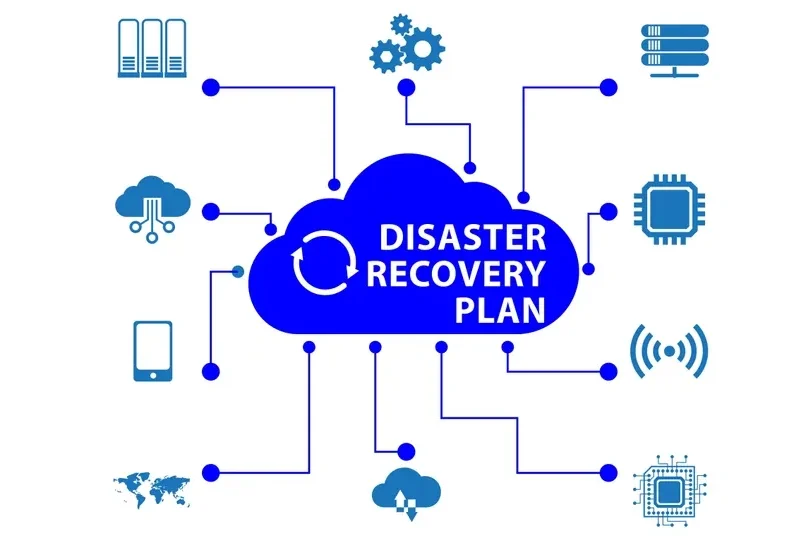
Cloud Disaster Recovery Best Practices for Business Continuity
Unexpected outages, cyberattacks, hardware failures, and accidental data deletion can disrupt business operations and affect customer trust. As organizations increasingly depend on cloud applications and digital services, preparing for these incidents has become an essential part of enterprise IT strategy.
Cloud disaster recovery best practices help businesses protect critical data, restore applications, and minimize operational downtime when unexpected disruptions occur.
In this guide, we explore practical strategies for designing a reliable cloud disaster recovery plan that supports business continuity, data protection, and enterprise resilience.
What Is Cloud Disaster Recovery?
Cloud disaster recovery is the process of restoring applications, infrastructure, and business data after a major disruption by using cloud-based resources and recovery procedures.
Depending on business requirements, organizations may use cloud backups, replicated environments, automated infrastructure deployment, or standby systems to restore operations.
A disaster recovery strategy typically includes:
- Data backup and replication.
- Application and infrastructure recovery.
- Defined recovery objectives.
- Secure access to backup environments.
- Automated recovery procedures.
- Regular disaster recovery testing.
- Communication and incident response plans.
Cloud disaster recovery is closely related to business continuity. Disaster recovery focuses on restoring IT systems, while business continuity covers the broader processes required to keep essential business functions operating.
Why Cloud Disaster Recovery Matters
Businesses may face disruptions caused by infrastructure failures, ransomware, configuration mistakes, regional outages, or compromised credentials.
Without a documented recovery strategy, restoring critical systems can take longer than expected and may result in data loss.
An effective cloud disaster recovery plan helps organizations:
- Reduce application downtime.
- Protect important business information.
- Recover from infrastructure and regional failures.
- Improve resilience against cyber incidents.
- Support regulatory and contractual requirements.
- Reduce uncertainty during emergency response.
- Maintain customer confidence.
The right recovery strategy depends on the business impact of an outage, the acceptable amount of data loss, and the available recovery budget.
1. Identify Critical Applications and Business Systems
Start by identifying the systems that must be restored first after a disruption.
Not every application has the same business importance. Payment systems, customer databases, authentication services, and order-processing platforms may require faster recovery than internal reporting tools.
Conduct a business impact analysis to determine:
- Which applications support critical business processes.
- How long each application can remain unavailable.
- Which data must be recovered.
- Which systems depend on other services.
- Who is responsible for approving recovery actions.
- What business and compliance requirements apply.
Classify applications by their recovery requirements and document the dependencies between them.
This information helps teams prioritize recovery investments instead of applying the same expensive recovery design to every workload.
2. Define Recovery Time and Recovery Point Objectives
Two important measurements guide cloud disaster recovery planning.
Recovery Time Objective (RTO) defines the target maximum time within which a system or business process should be restored after a disruption.
Recovery Point Objective (RPO) defines the target maximum amount of data loss measured in time that a business can tolerate.
For example, an application with an RPO of 15 minutes aims to limit data loss to approximately the most recent 15 minutes of data changes. An RTO of two hours means the target is to restore the application within two hours.
These are recovery targets, not guarantees. Actual results depend on the architecture, incident type, recovery procedures, and testing.
Set RTO and RPO values based on business impact, technical feasibility, and cost. More demanding targets generally require more sophisticated recovery mechanisms.
3. Implement a Reliable Cloud Backup Strategy
Backups are a fundamental component of disaster recovery, but simply creating backup copies is not enough. Organizations must also protect those copies and verify that they can be restored.
Follow these backup practices:
- Automate backups for critical databases and application data.
- Define backup frequency according to RPO requirements.
- Establish retention policies that meet business and regulatory needs.
- Encrypt backup data in transit and at rest.
- Restrict who can access, modify, or delete backup copies.
- Store copies in separate accounts, projects, or failure domains where appropriate.
- Monitor backup jobs and investigate failures.
- Test restoration procedures regularly.
For ransomware resilience, consider immutable backups or write-once retention controls where supported. Keep backup administration separate from ordinary production access when practical.
A successful backup job does not prove that an application can be recovered. Restoration tests are essential.
4. Choose the Right Disaster Recovery Architecture
Different recovery architectures offer different levels of readiness, complexity, and cost.
Common approaches include:
Backup and restore: Data and configuration are backed up, and infrastructure is rebuilt when required. This approach is often more cost-effective but may take longer to recover.
Pilot light: Essential components remain available in a minimal environment, while additional resources are deployed during recovery.
Warm standby: A reduced-capacity version of the production environment runs in the recovery location and can be scaled up during an incident.
Active-active: Multiple environments serve traffic simultaneously, allowing workloads to continue or shift when one environment fails. This approach generally requires more complex data consistency and traffic-management design.
Choose the approach that meets your recovery objectives without creating unnecessary cost or operational complexity.
5. Design for Regional and Infrastructure Failures
A cloud provider’s infrastructure may experience outages affecting a service, availability zone, or region. Recovery planning should consider which failure scenarios are relevant to each application.
Depending on business requirements, organizations may use multiple availability zones, cross-region backups, replicated databases, or a standby environment in another region.
Important considerations include:
- Identify the failure domains that could affect production.
- Keep recovery infrastructure and dependencies independent where necessary.
- Understand database replication and consistency behavior.
- Plan how application traffic will be redirected.
- Confirm that required identity, networking, and encryption services remain accessible.
- Review data residency and regulatory restrictions.
- Test the recovery environment independently of production.
Multi-region deployment does not automatically guarantee disaster recovery. Shared credentials, centralized dependencies, configuration errors, or replicated data corruption can affect multiple environments.
Design recovery procedures for the specific failures your organization needs to withstand.
6. Automate Recovery with Infrastructure as Code
Manual infrastructure reconstruction can introduce errors and increase recovery time during an emergency.
Infrastructure as Code (IaC) tools allow teams to define networking, compute resources, permissions, and other infrastructure in version-controlled configuration files.
Common tools include Terraform, AWS CloudFormation, AWS CDK, and Azure Bicep.
Use IaC to:
- Recreate infrastructure consistently.
- Reduce dependence on manual configuration.
- Maintain version history and change approvals.
- Validate recovery environments before production incidents.
- Automate repeatable provisioning steps.
- Document infrastructure dependencies.
Keep environment-specific configuration and secrets separate from general source code. Store recovery procedures alongside the infrastructure definitions and test them regularly.
Automation should include validation and controlled approvals for high-impact operations.
7. Secure Backup and Recovery Environments
Disaster recovery systems are attractive targets for attackers because they may contain copies of critical business data and the tools needed to restore production.
Protect recovery infrastructure with security controls that remain effective during an incident.
Recommended practices include:
- Apply least-privilege permissions to backup and recovery operations.
- Use multifactor authentication for privileged access.
- Protect backup administration accounts separately from production accounts.
- Encrypt sensitive backup data.
- Store credentials in approved secrets management systems.
- Monitor backup deletion and configuration changes.
- Restrict network access to recovery resources.
- Test recovery access without relying exclusively on compromised production credentials.
Where supported, use immutable backup controls and separate administrative boundaries to reduce the risk that an attacker can disable both production systems and recovery copies.
8. Monitor Backup Jobs and Recovery Readiness
Disaster recovery is an ongoing operational responsibility. Teams need to know whether backups are current, whether replication is healthy, and whether the recovery environment is ready.
Monitor important signals such as:
- Backup job success and failure rates.
- Age of the latest successful backup.
- Replication lag.
- Storage capacity and retention status.
- Recovery environment health.
- Changes to backup permissions.
- Completion of scheduled restoration tests.
Configure alerts that reach the people responsible for responding to failures. A backup that silently stops running can leave an organization exposed until a real incident occurs.
Review monitoring coverage regularly as applications, data sources, and recovery requirements change.
9. Test Disaster Recovery Plans Regularly
A disaster recovery plan is useful only when it can be executed successfully.
Regular testing helps teams discover missing dependencies, outdated credentials, incorrect configuration, and unrealistic recovery assumptions before an actual outage occurs.
Useful testing methods include:
- Tabletop exercises to review roles and decision-making.
- Individual backup restoration tests.
- Application recovery tests in an isolated environment.
- Failover and failback exercises.
- Regional recovery simulations where appropriate.
- Validation of data integrity after restoration.
- Measurement of actual RTO and RPO results.
Start with controlled tests that minimize risk to production. More advanced failover exercises should have clear scope, approval, monitoring, and rollback procedures.
Document test outcomes, assign owners to identified gaps, and repeat tests after significant architecture changes.
10. Prepare a Clear Incident Response and Recovery Runbook
During a major outage, teams need clear instructions rather than relying on memory or informal communication.
Create recovery runbooks for critical applications and make them accessible even when primary production systems are unavailable.
Each runbook should include:
- Incident severity and escalation criteria.
- Roles and responsibilities.
- System dependency information.
- Recovery prerequisites and access requirements.
- Step-by-step restoration or failover instructions.
- Data validation and application health checks.
- Communication procedures.
- Conditions for returning to the primary environment.
- Post-incident review requirements.
Keep runbooks version-controlled and review them after tests, infrastructure changes, and real incidents.
Clear procedures reduce confusion and help teams coordinate recovery activities under pressure.
11. Optimize Disaster Recovery Costs
Maintaining duplicate infrastructure can become expensive, especially when businesses require low RTO and RPO targets across multiple regions.
The goal is to align recovery spending with business risk.
Consider these cost optimization practices:
- Use backup and restore for workloads that tolerate longer recovery times.
- Reserve warm standby or active-active designs for critical systems.
- Review backup retention and storage tiers.
- Remove obsolete recovery resources safely.
- Monitor cross-region replication and data-transfer costs.
- Test whether the recovery environment has sufficient capacity.
- Include licensing, networking, security, and operational costs in estimates.
Do not reduce backup frequency or recovery capacity without checking the effect on business objectives. A cheaper architecture is not effective if it cannot meet the organization’s recovery requirements.
12. Continuously Improve the Disaster Recovery Strategy
Business applications, cloud services, and security threats evolve over time. Disaster recovery plans must evolve with them.
Review recovery objectives whenever important business processes change. Reassess dependencies after migrations, major releases, database changes, or identity-system updates.
Use test results and incident reviews to improve recovery procedures. Track unresolved issues, assign responsible owners, and prioritize improvements based on business impact.
Continuous improvement helps ensure that recovery plans remain practical rather than becoming outdated documentation.
Conclusion
Cloud disaster recovery best practices help organizations protect critical data, restore business applications, and reduce the impact of unexpected disruptions.
A strong strategy combines clearly defined recovery objectives, secure backups, suitable recovery architectures, automated infrastructure provisioning, continuous monitoring, and regular testing.
Start by identifying critical systems and defining acceptable recovery targets. Then implement a recovery approach that balances resilience, operational complexity, and cost.
With tested procedures and clear ownership, enterprises can improve their ability to recover from disruptions and maintain business continuity.
Planning your enterprise cloud strategy? Explore related articles on cloud architecture, infrastructure as code, cloud security, and cloud cost optimization to strengthen your organization’s resilience.